Investor Pulse · Analysis
ARIDGE plans flight demonstrations across the US starting January 2027
Reported
ARIDGE plans demonstration flights across the US starting January 2027, following flights in the United Arab Emirates. It is also preparing flying and training centres in China, with customer deliveries targeted for 2027 subject to certification. XPeng owns a minority stake and already earns service fees from ARIDGE. Deliveries could add manufacturing fees, technology royalties and commissions on sales through XPeng’s network.
ARIDGE plans to take its Land Aircraft Carrier to the US for demonstration flights from January 2027, according to STAR Market Daily.
In a Yangcheng Evening News video of American students visiting its Guangzhou base on 16 October, founder Zhao Deli describes flights in different US regions. The newspaper says ARIDGE also wants to gradually explore the US market.
The plans do not set a date for US deliveries. Separately, 36Kr reports that XPeng will attend CES in Las Vegas on 6–9 January 2027. The reports do not identify CES as one of the locations of ARIDGE’s flights.
How the Land Aircraft Carrier works
The Land Aircraft Carrier pairs a six-wheeled, four-seat road vehicle with a separate two-seat electric aircraft. The aircraft folds into the rear compartment for travel, then unfolds for take-off at a permitted flying site. The road vehicle stays on the ground.
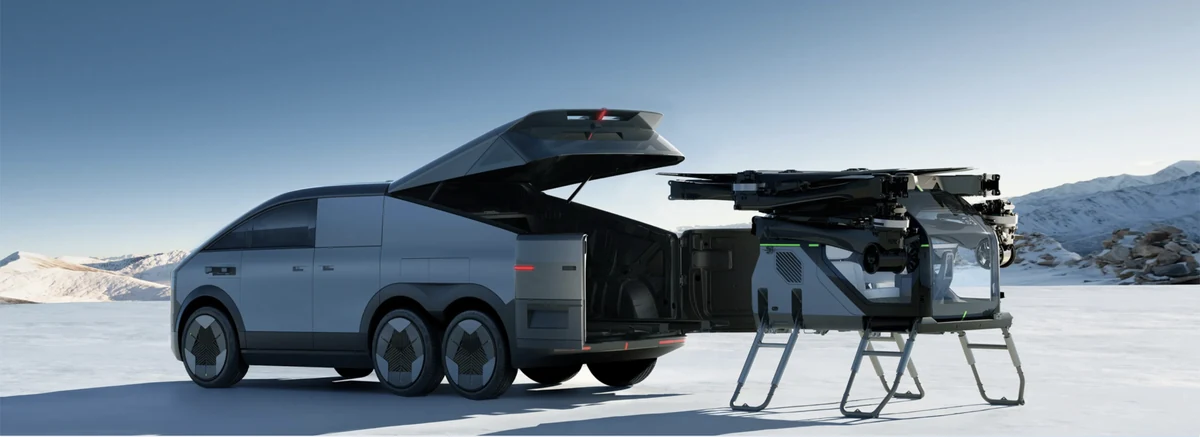
The carrier is also a mobile charger. Its battery and fuel-powered generator recharge the aircraft while parked or driving. XPeng says a full tank and charged carrier battery provide energy for up to six flights, with recharging between them.
The Middle East: flights and testing plans
ARIDGE completed a piloted flight in Dubai on 12 October 2025 with local aviation permission. It announced agreements for 600 vehicles with partners in the United Arab Emirates, Qatar and Kuwait, aiming to enter the region’s market as early as 2027.
Two ARIDGE aircraft then flew together in Abu Dhabi on 17 September 2026. The next day, the company signed an agreement with Ras Al Khaimah to develop a flight-testing programme overseen by the country’s civil aviation authority.
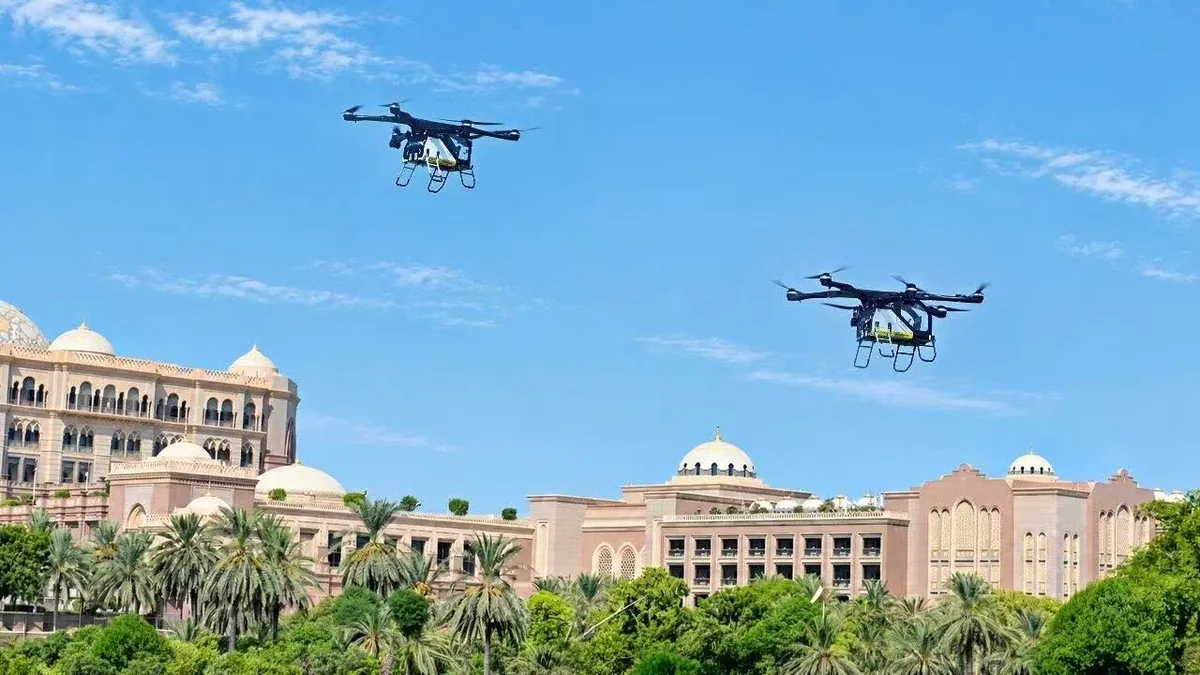
The planned tests would check how the aircraft copes with local heat and sand. Commercial flights need separate approval.
Places to learn and fly in China
ARIDGE’s planned centre at Dong’an Lake in Chengdu would bring sales, deliveries, flying lessons and after-sales support together.
ARIDGE announced the project on 1 September 2026. It aims to finish construction by year-end, then open the centre in stages for trial operations.
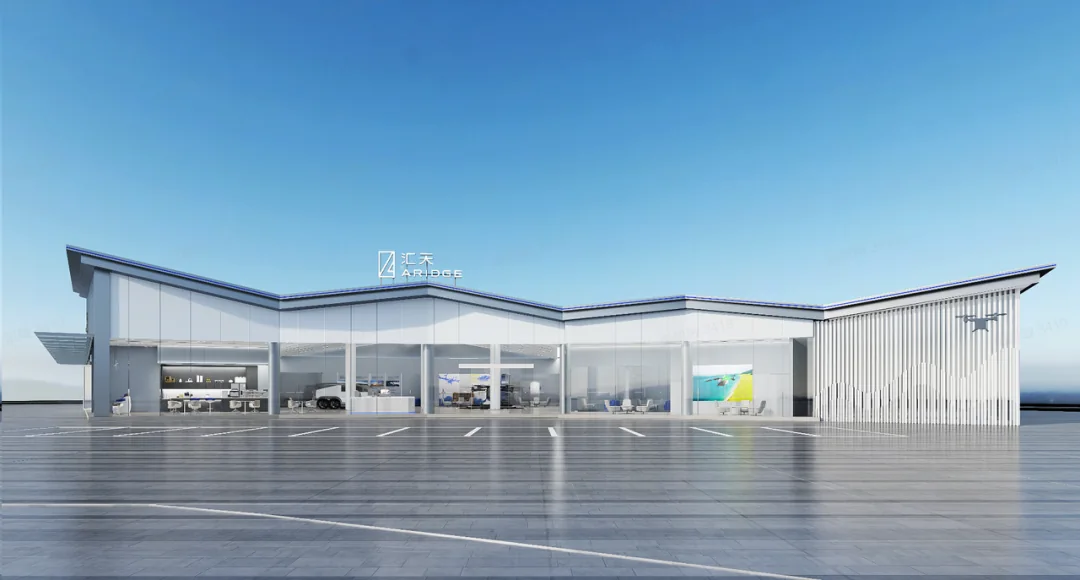
Zhao also said on 24 September that a flying demonstration zone could open in Changsha as early as the second half of 2027. These projects would give customers places to learn and fly.
The path to deliveries in 2027
In an interview published on 27 August, Zhao moved the delivery target from 2026 to 2027. The aircraft still needs safety approval.
July media reports named ARIDGE, EHang, Volant and AutoFlight as the four eVTOL makers on the Chinese aviation regulator’s first proposed fast-track list for manned aircraft certification. That could speed up the review; it is not an approval to start deliveries.
US demonstrations would need permission from the Federal Aviation Administration. Selling the aircraft for ordinary customer flights would require further approval.
How XPeng already earns from ARIDGE
ARIDGE, formerly XPeng AeroHT, is an affiliate of XPeng chairman He Xiaopeng. XPeng holds a minority stake; ARIDGE is not its subsidiary. Its investment could gain value if ARIDGE succeeds.
XPeng already earns service fees from ARIDGE. It reported RMB89.6 million of support services to the related Huitian companies in 2025 and RMB50.3 million in the first half of 2026. These are services provided, not cash collected.
The 2026–28 agreement covers work before mass production too. ARIDGE pays the agreed costs plus 50% for research and development, 15% for technology consulting, and 5% for factory upgrades and outsourced services. These are additions to costs, not profit margins.
What 7,000 sales could bring to XPeng
After mass production starts, ARIDGE pays XPeng to build vehicles and use its technology. Customer sales through XPeng’s network earn a separate commission.
ARIDGE reported 7,000 orders in October 2025. That gives a useful scale for an example, without assuming when those orders become deliveries.
XPulse scenario, not a forecast: XPeng builds and sells 7,000 vehicles to ARIDGE under the 2026–28 agreement, and all 7,000 customer sales use XPeng’s network. This does not assume all deliveries happen in 2027.
| Fee | Per vehicle, RMB | 7,000 units, RMB m |
|---|---|---|
| Manufacturing | 12,000 | 84 |
| Royalty | 18,000 | 126 |
| Commission | 71,000 | 497 |
| Combined | 101,000 | 707 |
XPulse calculation using the agreement’s stated fees. Manufacturing and royalty rates include tax. The total excludes payments for materials and work before mass production; it is not net revenue, profit or cash already collected. Commission falls to RMB60,000 on each vehicle beyond the first 25,000.
The RMB707 million total is about US$105 million. Royalties and commissions account for RMB623 million of it. The sales channel matters: if only half of the customer sales used XPeng’s network, the total for all three fees would fall to RMB458.5 million.
XPeng’s costs for staff, factories and sales determine how much it keeps.
How ARIDGE compares with other aircraft makers
As of October 2026, only two aircraft in this comparison have all three Chinese approvals: the design is approved, the manufacturer can build it, and individual aircraft are cleared to fly.
EHang’s EH216-S completed those approvals on 7 April 2024. It carries passengers. Its first operators received permission for paid flights at designated sites in March 2025.
AutoFlight’s CarryAll completed the three approvals on 21 July 2025 and has been delivered to a customer. It carries cargo. Its passenger model, Prosperity, is still being tested for approval. In August 2026, a regulator-observed test showed that two failing battery cells did not cause a wider battery failure.
GAC’s GOVY AirCab flew in Guangzhou in March 2026. GAC said then that it aimed for approval and deliveries by year-end.
Volant’s VE25-100 moved from vertical to forward flight with a pilot on board in May 2026.
Aerofugia is seeking approval for its AE200 passenger aircraft.
ARIDGE’s offer is a package for personal flying: an aircraft, its road carrier and places to learn and fly. Convenience could help turn interest into sales once it is approved.
What ARIDGE still owes XPeng
The Huitian companies related to ARIDGE owed XPeng RMB146.25 million (about US$22 million) for support services at 30 June 2026. The balance includes earlier work; the filing does not say it was overdue.
Payment would add cash to XPeng. The income from those services has already been recorded.
ARIDGE announced its latest equity funding round on 13 March 2026: nearly US$200 million, taking its total equity funding to about US$1 billion.
What success could mean for XPeng
XPulse’s reading: ARIDGE could bring XPeng a more valuable investment and more business for its technology, factories and sales network. XPeng can earn fees before ARIDGE becomes profitable, provided ARIDGE can pay.
Customer deliveries could also strengthen XPeng’s reputation. A flying vehicle reaching paying owners would give weight to its ambition to build an AI technology business spanning cars, robotics and aviation.
The connection already reaches its cars. XPeng says the GX uses safety backups developed for flying cars, and the G9L follows the GX’s approach. Backups for functions such as braking, drive control and door unlocking help them keep working if a component fails. This gives customers a practical benefit from the work in aviation.
Approval and customer deliveries in 2027 could turn that broader promise into more business. The number delivered, the share sold through XPeng and the payments collected would show the financial result.
Dollar equivalents use the 16 October 2026 official reference rate of RMB6.722 per US$1, published by the China Foreign Exchange Trade System.
- Aviation: progress and XPeng’s financial connection →
- ARIDGE’s proposed CAAC fast-track status →
- He Xiaopeng on flight certification →
Where this comes from
- Media 特斯拉“起飞”了,中国飞行汽车飞到哪了? · STAR Market Daily (Cailian Press), Li Jiayi and Wang Nai, via Eastmoney · 2026-10-16 · ZH
- Media 体验飞行汽车,参观大熊猫……美国青年在广州读懂中国 · Yangcheng Evening News (羊城派), Zhu Jiale, Guo Ziyang and Sun Wei · 2026-10-16 · ZH
- Primary Land Aircraft Carrier: folding aircraft, road transport and onboard charging · XPeng · 2024-09-04 · ZH
- Primary Land Aircraft Carrier Dubai flight and Middle East order agreements · ARIDGE · 2025-10-12 · ZH
- Primary ARIDGE and Ras Al Khaimah agree on a flying-car regulatory sandbox · ARIDGE · 2026-09-20 · ZH
- Primary ARIDGE announces nearly US$200 million in new equity financing · ARIDGE · 2026-03-13 · ZH
- Media Interview with Zhao Deli: Land Aircraft Carrier deliveries targeted for 2027 · 一虎談 (Hu Yihu), via Sina Hong Kong · 2026-08-27 · ZH
- Primary 2026–28 cooperation framework agreement with Guangdong Huitian · XPeng / HKEXnews · 2025-08-22
- Primary 2025 annual report — Notes 14 and 29, minority investment and related-party services · XPeng / HKEXnews · 2026-04-16
- Primary 2026 interim report — Note 26, related parties and outstanding service receivables · XPeng / HKEXnews · 2026-09-28